
Complete Range
Wide Knowledge
Value Adding Focus

0
Complete Range
Wide Knowledge
Value Adding Focus
Today, a label does much more than display a product number or shipping address. With the right technology, it becomes an essential part of a company's information flow, providing greater control over products, inventory, and deliveries.
Smart labels enable automated identification, improved traceability, and more efficient logistics processes. Technologies such as RFID, NFC, and QR codes are already widely used across manufacturing, e-commerce, healthcare, and retail, where industrial labels, digital product identification, and automated data capture are becoming increasingly important.
When smart labeling is combined with the right software, printers, and system integration, the label becomes a natural part of the company's digital information flow. The result is better visibility, more efficient workflows, and improved decision-making.
Tip: Not sure which label is right for your business?
Read our Guide: Choosing the right label for your industry.
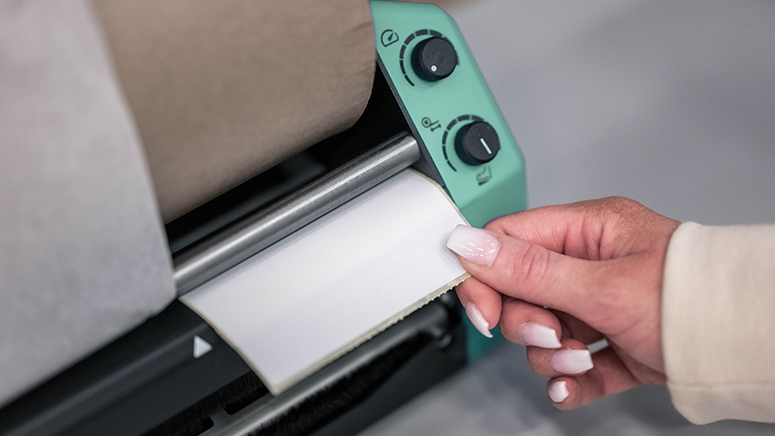


A smart label contains technology that enables products to be identified, tracked, or connected to digital information automatically. Depending on your business and application, different technologies offer different advantages. The most common are RFID, NFC, and QR/2D codes.
RFID labels use radio frequency technology to identify products automatically. They are particularly suitable when large volumes need to be registered quickly and accurately, for example during inventory management and warehouse operations.
NFC (Near Field Communication) is based on the same technology as RFID but operates over a much shorter range and is primarily used with smartphones. It is ideal when users need instant access to digital information directly from their mobile device.
QR codes, Data Matrix codes, and other 2D codes connect physical products to digital information. They are used across many industries and are becoming increasingly important with the introduction of the Digital Product Passport (DPP).
Together, these technologies transform the label into much more than an information carrier—it becomes a bridge between the physical product and digital information.
In some solutions, RFID and NFC can even be combined within the same label, supporting both internal logistics processes and customer interaction. With the right technology, businesses can improve traceability, streamline operations, and create added value for both the business and its customers.
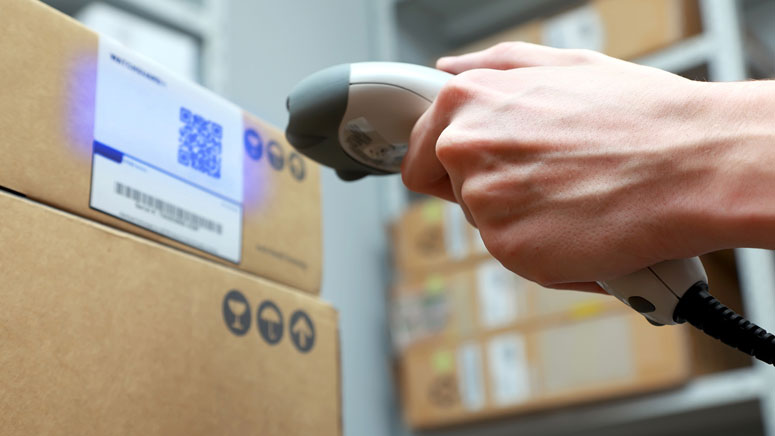
Growing demands for faster deliveries, improved control, and greater traceability are driving the adoption of smart labeling across almost every industry. At the same time, companies are looking to reduce manual processes and create more efficient workflows. Smart labels improve inventory control, automate key processes, and simplify traceability throughout the supply chain. They reduce manual handling, speed up inventory counts, and minimise picking errors. The result is better visibility, greater operational efficiency, and an improved customer experience.
For procurement teams, this means better control of inventory and material flows. For logistics managers, it means faster operations and fewer errors. For quality and sustainability professionals, smart labeling provides more reliable documentation and better access to accurate data.
Streckkoder är fortfarande en mycket effektiv och kostnadseffektiv lösning för många verksamheter. De är enkla att implementera och fungerar utmärkt när produkter skannas en i taget och etiketten är synlig.
För många företag är RFID-märkning ett naturligt nästa steg när kraven på automatisering och spårbarhet ökar. Eftersom RFID kan läsa många etiketter samtidigt, även när de inte är direkt synliga, sparar tekniken tid vid inventering, inleveranser, utleveranser och lagerhantering. RFID används också för snabb inventering i lager och butik. I handeln kan samma etikett dessutom fungera både som lageridentifiering och stöldskydd, vilket förenklar hanteringen genom hela produktens livscykel.
Traceability has become a key competitive advantage. Smart labels automatically register products as they move through different stages of the business - from inbound deliveries and production to warehousing, shipping, and returns. This provides better visibility across the entire supply chain and makes it easier to track products, identify deviations, and streamline inventory management.
At the same time, smart labeling contributes to reduced waste, fewer picking errors, better resource utilisation, fewer repeat deliveries and more reliable data for reporting and analysis. The greatest value is achieved when labeling is integrated with your ERP, WMS, or production systems. Labels then become a natural part of your company's digital information flow, providing better data and stronger decision support.
By combining labels, printers, and software, information can be shared automatically across different parts of the organisation. This reduces manual work, improves data quality, and creates more efficient workflows.
At Boxon, we help businesses find the right labeling solution—from traditional labels and RFID to printers, software, and system integration. With solutions such as Tracy, you can manage and administer labels securely and efficiently, regardless of where your operations are located.
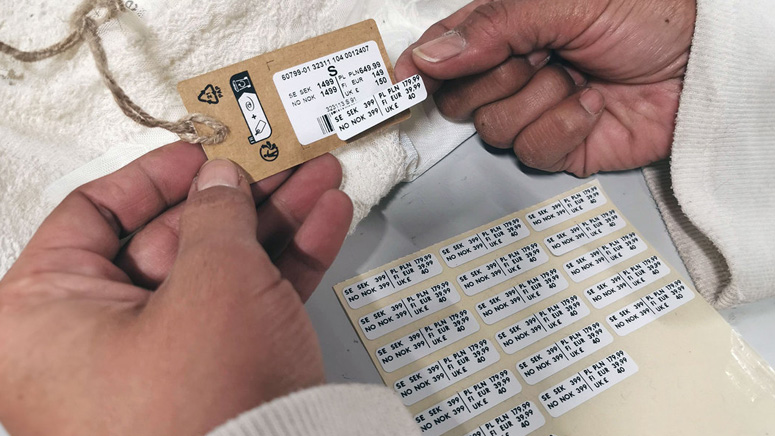
One example is Kappahl, which has been using Tracy since 2010 to automate its label management and ensure that the correct information follows each product from supplier to distribution centre. The result is improved traceability, more efficient logistics, and greater control throughout the product flow.
Implementing smart labels doesn't have to be complicated. Most companies begin with a clearly defined area where the benefits quickly become evident—for example warehouse management, inventory control, or product labeling.
Start by identifying where your current processes offer the greatest potential for improvement. Choose the right technology based on your business needs, integrate your labeling solution with existing systems, and begin with a pilot project. From there, you can gradually expand the solution as your business grows.
Smart labels are about far more than modern product labeling. They provide greater control, more efficient workflows, and improved traceability throughout the entire supply chain. Whether your goal is to optimise warehouse operations, strengthen product traceability, or automate logistics, there is a solution that can be tailored to your business.
Would you like to find the right labeling solution for your business? Contact our experts - we'll help you get started.
