
Complete Range
Wide Knowledge
Value Adding Focus

0
Complete Range
Wide Knowledge
Value Adding Focus
The EU's Packaging and Packaging Waste Regulation (PPWR) introduces new requirements for companies placing packaging on the European market.
The regulation will influence how packaging is designed, produced, labelled, reused, and recycled across the EU. Its aim is to reduce packaging waste, increase recycling, promote reuse, and support the transition to a circular economy.
For businesses, the question is no longer whether PPWR will affect their packaging operations – but how prepared they are for the changes ahead.
PPWR replaces the previous Packaging and Packaging Waste Directive (PPWD) and establishes a harmonised regulatory framework across all EU Member States.
The regulation aims to reduce packaging waste, increase recycling and the use of recycled materials, promote reuse and refill systems, improve packaging design and resource efficiency, and create consistent packaging requirements across the European market.
Unlike a directive, PPWR applies directly in all EU countries, creating a level playing field for businesses operating across borders.

11 February 2025
PPWR officially entered into force, replacing the previous Packaging and Packaging Waste Directive (PPWD).
12 August 2026
The regulation begins to apply across the EU. From this point, companies placing packaging on the market will need to comply with the relevant requirements as they come into effect.
2028
Harmonised labelling requirements will be introduced to help consumers identify packaging materials and sort packaging correctly for recycling.
2029
The first recycled content requirements for plastic packaging will apply. New labelling requirements for reusable packaging will also be introduced to support reuse systems and improve traceability.
2030
Several of the regulation’s most significant requirements take effect. Packaging must meet stricter recyclability criteria, reuse targets begin to apply to selected packaging formats, and new rules on packaging minimisation and empty space come into force.
2035
Packaging must not only be recyclable by design but also recyclable at scale through existing collection, sorting, and recycling systems.
PPWR affects almost every aspect of packaging - from material selection and design to logistics, labelling, traceability, and reporting.
The regulation affects the entire packaging value chain and will require packaging producers, distributors, and users to review both current packaging solutions and future packaging strategies. For many companies, what was once considered a sustainability initiative will become a legal requirement. Businesses that start preparing early will be better positioned to meet future requirements, reduce compliance risks, and avoid costly redesigns later.
By 2030, packaging placed on the EU market must meet stricter requirements designed to support a circular economy.
Design for Recycling
All packaging must be designed to meet EU recyclability criteria and support effective material recovery. From 2035, packaging must not only be recyclable by design but also recyclable at scale through existing collection, sorting, and recycling systems.
Labelling and Information
Harmonised EU-wide labels will indicate material composition and sorting instructions. Digital identifiers, such as QR codes, will support traceability and reuse systems where required.
Recycled content in Plastic Packaging
Mandatory minimum levels of recycled content will apply to plastic packaging from 2030, with requirements increasing further in the years that follow. For contact-sensitive PET packaging, the minimum recycled content requirement will be 30%. The same level will apply to single-use PET beverage bottles. For contact-sensitive plastic packaging made from other materials, the minimum requirement will be 10%.
All other plastic packaging will be required to contain at least 35% recycled content by 2030.
Reuse and Refill
Reuse targets will apply to selected packaging formats, including transport packaging, grouped packaging, beverages, and e-commerce packaging. Businesses will need to evaluate where reusable systems are practical and economically viable.
Packaging minimisation and void space
Packaging must use only the amount of material necessary for its intended purpose. Misleading design features, such as false bottoms or unnecessary layers, will be prohibited. For grouped, transport, and e-commerce packaging, empty space may not exceed 50%, encouraging businesses to optimise packaging dimensions and reduce unnecessary material use.
Restrictions on certain single-use packaging formats
From 2030, several single-use packaging formats will be restricted or prohibited, particularly where more sustainable alternatives are available.
While many PPWR requirements take effect in 2030, the regulation will continue to evolve over the following decade.
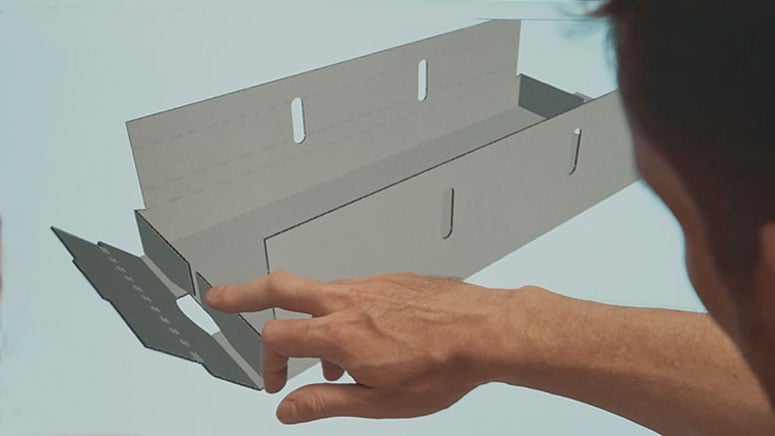
Packaging minimisation will remain a key requirement, with businesses needing to ensure packaging uses no more material than necessary. Recycled content targets will increase over time, supporting the EU’s transition to a circular economy. Strict limits on empty space in transport and e-commerce packaging will continue to drive more efficient packaging design. Reuse targets will also become more demanding, particularly for transport packaging and packaging used within the same organisation.
Recyclability requirements will tighten further. By 2030, packaging must be recyclable, and by 2035 it must be recyclable at scale through established collection, sorting, and recycling systems.
Companies should already be reviewing material choices, packaging design, recyclability, supply chain traceability, and documentation processes to prepare for future requirements.
For several years, we have been preparing for the transition towards more circular packaging solutions and upcoming EU requirements.
PPWR is an important step in that journey, and we continue to develop our portfolio and services to help customers navigate the changes ahead.
Our work focuses on:
We also work actively with packaging optimisation and right-sizing initiatives, helping customers reduce material consumption while maintaining product protection and operational efficiency. In addition, we are exploring reusable packaging solutions that support improved recyclability.
Today, 42% of the total material mass we sell contains recycled content, with recycled content levels ranging from 30% to 100%. We also provide Product Carbon Footprint (PCF) data for approximately 93% of our sales, helping customers make informed packaging decisions based on environmental data. This supports PPWR readiness by improving transparency around recycled content, material traceability, and environmental performance.
For our customers, this means reduced regulatory risk, improved transparency, and greater confidence when investing in packaging solutions designed for the future.
Through FSC®-certified packaging solutions and CO₂-calculated products, Inrego strengthened its sustainability performance.
Through material optimisation and automation, Nomeco reduced stretch film consumption by 33%, lowering both material use and emissions.
Preparing for future compliance, Boxon has launched its 100% recycled content PET big bags which are food contact.
Although some requirements will not apply until 2030 and beyond, preparation should start today. Small design improvements can significantly reduce environmental impact and total cost of ownership (TCO). The key is having a clear roadmap towards 2030 and beyond.
Start by analyzing:

Looking for more detailed information?
Explore our PPWR Q&A for insights into key topics, upcoming requirements, and important milestones for 2026 and beyond.
PPWR represents one of the most significant changes to packaging legislation in decades.
Businesses that start preparing now will be better positioned to meet future requirements, reduce compliance risks, and remain competitive. At Boxon, we continuously monitor regulatory developments and help customers make informed packaging decisions that balance compliance, functionality, sustainability, and cost.
Contact us to discuss how PPWR may affect your packaging solutions and how we can help you prepare for the future.

