
Complete Range
Wide Knowledge
Value Adding Focus

0
Complete Range
Wide Knowledge
Value Adding Focus
Packaging is often evaluated based on purchase price. But the real cost arises throughout the entire flow. In this article, we explain how packaging choices affect material usage, packing time, warehousing, transport and returns – and why a holistic perspective can lead to both lower costs and a reduced environmental footprint.
TCO (Total Cost of Ownership) for packaging refers to the total cost of a packaging solution throughout its entire lifecycle – from procurement and material usage to packing processes, warehousing, transport and potential returns.


Price per unit is easy to compare, but it rarely tells the full story. In practice, packaging affects large parts of the business: how quickly you can pack, how much material is used, how efficient transport becomes, and how often damage or returns occur.
This is where Total Cost of Ownership (TCO) becomes relevant. Instead of focusing solely on the purchase price, you assess the total cost across the entire flow.
At Boxon, we continuously analyse our customers’ packaging flows from a TCO perspective to identify improvement potential that is not always visible in a traditional price comparison.
A TCO perspective means taking factors such as the following into account:
When these elements are considered, it becomes clear that a low purchase price does not always mean a low total cost.
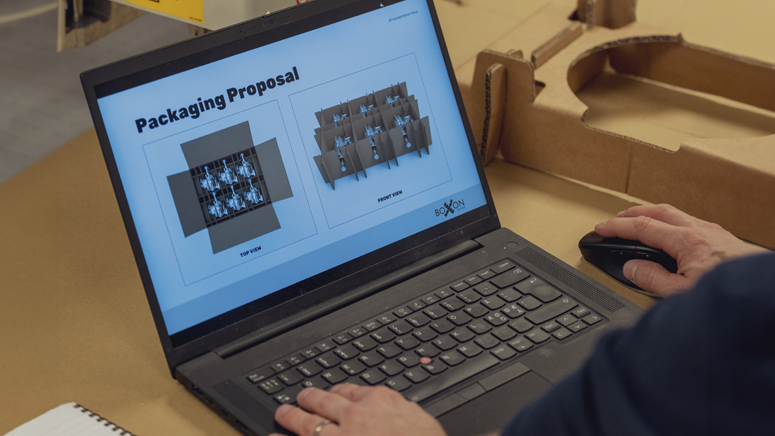
The size and design of the packaging determine how much material is used in production. Small format adjustments can reduce waste and deliver immediate cost savings. At the same time, quality should be adapted to the product’s actual protection requirements. An over-specified solution results in unnecessary material use, while a design that is too weak can lead to damage and returns, which quickly becomes costly.
By comparing alternative solutions, it is often possible to identify the most competitive overall solution – not just the one with the lowest unit price.
We combine structural design expertise and material knowledge to develop packaging solutions optimised for both performance and total cost.

Packaging plays a significant role in daily packing efficiency. Incorrect sizing or impractical solutions create extra handling steps and longer packing times per order. The right packaging choice can instead:
In high-volume operations, even small improvements can generate significant long-term impact.
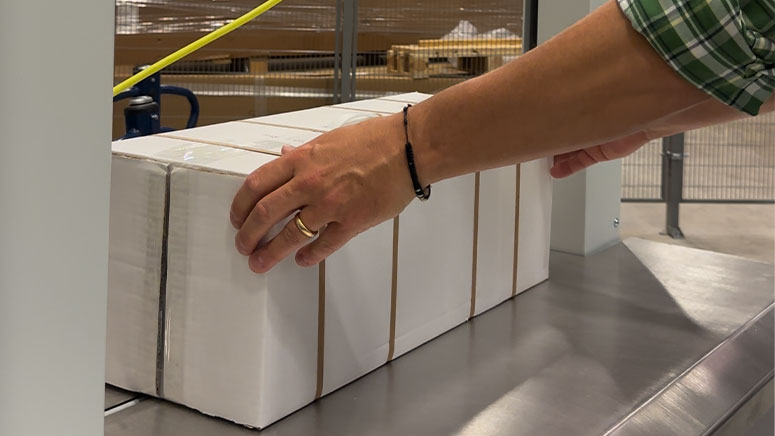
The size and design of packaging directly affect transport efficiency. Oversized packaging often leads to lower fill rates, increased use of void fill materials, a larger environmental footprint and higher freight costs.
Transport costs apply regardless of whether packaging is delivered flat-packed or ready for use. When size, design and pallet patterns are optimised, more units can fit into each shipment, reducing the cost per package.
The choice of flute profile and paper quality also influences transport efficiency. In some cases, the overall thickness of the packaging can be reduced without compromising strength – enabling more efficient transport.
Proper design also reduces the risk of damage and returns, saving both costs and resources.
We can help you optimise packaging dimensions to increase fill rates and reduce both transport costs and environmental impact, without compromising product protection.
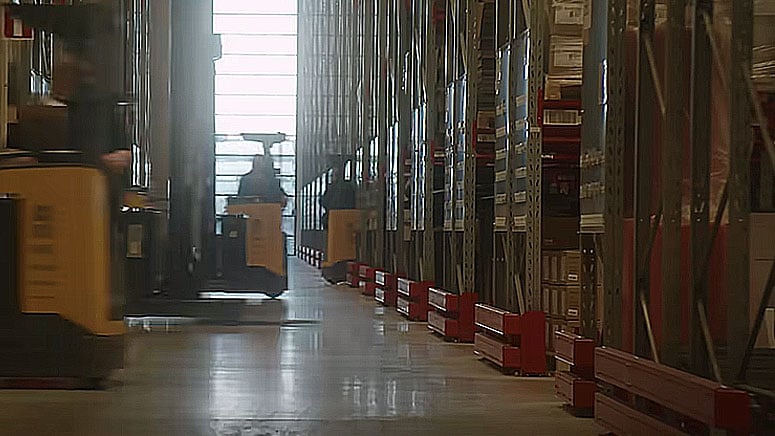
Larger orders often result in a lower unit price and more efficient transport. At the same time, they involve capital commitment and storage space requirements.
For companies with limited space, external warehousing and call-off solutions can combine volume advantages with flexibility. This reduces the risk of shortages and provides security in case of production fluctuations or extended lead times.
Working with TCO does not mean measuring everything in detail. Often, it is enough to ask a few key questions:
With the right analysis and packaging strategy, TCO becomes a practical improvement tool – not just a theoretical concept. At Boxon, we combine material expertise, structural design, logistics and warehousing solutions to help customers optimise their packaging flows from a holistic perspective.
